Published 20 January 2026 in News
The Helsinki Notebooks
Mandela, the Father of the South African Nation: And Gool, the Mother It Chose to Forget By Moshumee Dewoo
The Helsinki Notebooks - Global Dispatches Against Fascism and the Far Right - Essay, Vol. 2, No. 7
The University of Helsinki - Faculty of Social Sciences - Academic Disciplines - Political History
Posted 15 January 2026

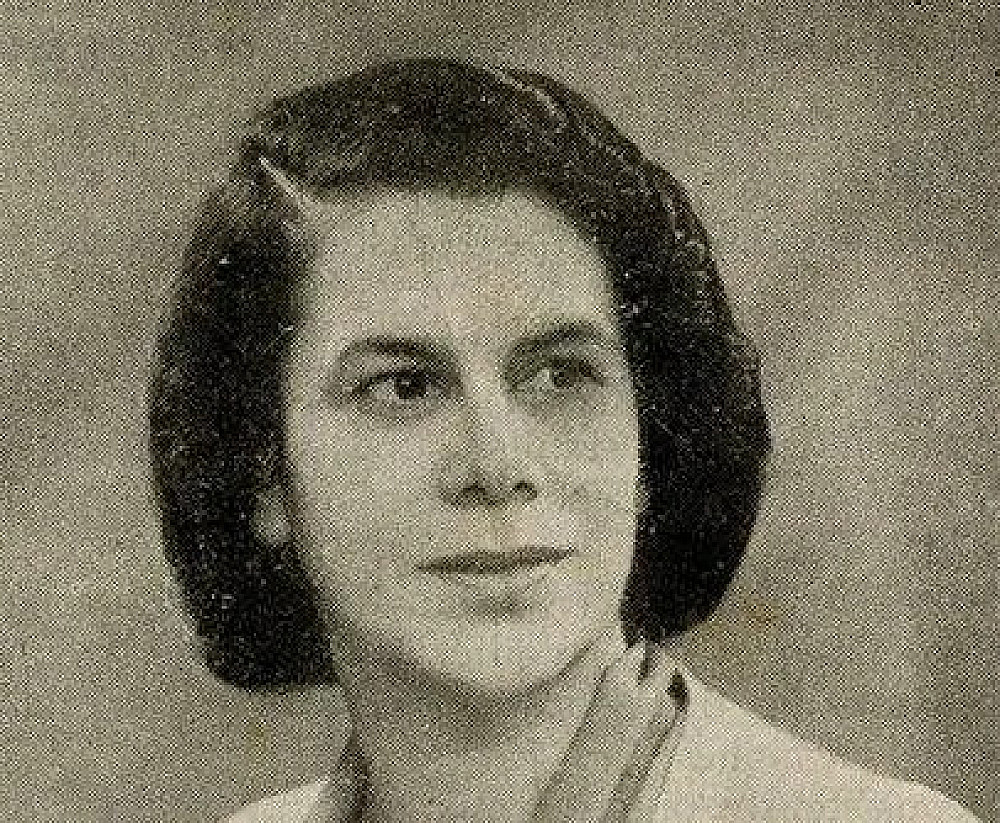
Featured Image: Drum Magazine, Source: Africa Media Online. Retrieved in January 2026
In the final years of apartheid and the dawn of independence (1990s), South Africa faced the immense task of reconstructing itself, united this time, despite its manifold differences, as one people, one nation – a rainbow nation.(1) To do so, it required a unifying myth, a national story: something that could reconcile its once seemingly irreconcilable contradictions; someone with the authority to propose stability amid societal destruction; a figure that could be easily embraced by Black South Africans as a symbol of struggle and dignity, by White South Africans as a promise of forgiveness, and by the world as proof of moral transcendence and democratic resolve.
Nelson Rolihlahla Mandela was perfect for the role, his life story aligning seamlessly with the moral grammar of reconciliation, which would see him consecrated as the legitimate face of the South African transition, the father of the nation. Born in the Transkei hills, and heir to minor rural Black royalty, Mandela’s political trajectory took him from local activism in rural South Africa to twenty-seven years in prison for sabotage and conspiracy against the state in the 1960s, convinced then that only armed struggle could end apartheid. During those long years, he turned to cultivating a public image of restraint, dignity, and principled leadership instead, espousing the authority of his inherited status and the symbolic weight of his struggle as moral capital, which he would deploy upon his release in 1990 to lionise a transition predicated on the moral ideal of the rainbow nation.
The construction of this ideal, however, came at a cost.
It required a trade-off.
It demanded that South Africa’s narrative of liberation be domesticated through the quiet erasure of other genealogies of liberation, especially where these risked complicating the tidy narrative of Mandela as father of the nation. In practice, this meant the systematic sidelining of its mothers – activists, organisers, feminists, and intellectuals whose work had been central to the nation’s liberation.
Among them, Zainunissa “Cissie” Gool – a mixed-race woman born in Cape Town, heir to a privileged socio-economic position that she would spend her life rejecting, choosing instead to challenge the apartheid regime alongside the city’s dockworkers, factory women, sailors, teachers, domestic labourers, washerwomen, street vendors, and unemployed youth, with whom she turned District Six, Salt River, and the docks into the most prolific epicentre of anti-fascist resistance in the country between the 1930s and 1960s.
Gool’s political vision was clear, holistic, concrete: social justice coupled with economic redistribution, urban planning paired with equitable housing, gender equality integrated with political representation, and local governance driving structural transformation. Building on this, she fused feminist critique, urban modernity, and structural reform through both local and broader communist and anti-colonial networks, positioning herself at the forefront of a radical, plural, and transgressive liberation that demanded systemic change across race, class, and gender.
Put brusquely, where Mandela offered a way to heal, Gool offered a way to change.
In 1994, healing won.
And with this, the opportunity for an inclusive, feminist, and radically transformative South African democracy was foreclosed. For, even as post-apartheid South Africa adopted a progressive constitution, women have remained underrepresented in the highest political offices, with gender parity only slowly emerging in parliament and provincial governments: “In a country where systemic inequality – rooted in both apartheid and patriarchal legacies – continues to shape governance and daily life, the question of gender representation in Parliament is not symbolic; it is structural.”(2)
This structural deficit snowballs brutally in everyday life, particularly in the epidemic of gender-based violence (GBV), which persists at crisis levels. South Africa consistently records among the highest rates of femicide and sexual assault in the world, revealing not only the deep chasm between constitutional promise and lived reality, but the deferral of the feminist revolution Gool had imagined, in which political representation, social equality, and bodily autonomy were inseparable: “According to the South African Police Services (SAPS) crime statistics, a total of 13,453 sexual offences were recorded between January-March 2025. This includes 10,688 rape cases, 1,872 sexual assaults, 656 attempted sexual offences and 236 contact sexual offences. These figures depict how unsafe it remains to be a woman or a girl in South Africa, a situation that has pushed many individuals to question uncomfortable truths about how society values and fails women and girls at the same time.”(3)
Moreover, structural inequalities persist, especially in urban centres like Cape Town, with mass housing, labour, and public service challenges speaking directly to the neglect of Gool-style radical urban reform: “By most metrics, South African cities are among the most unequal in the world […]. As with other South African cities, Cape Town is highly inequitable, its spatial structure generally still reflective of apartheid urban patterns. […] research shows that there is continued high social polarisation and socio-economic segregation but that these are increasingly linked to class – so that the ‘new division is between racially-mixed middle-class neighbourhoods, on one hand, and black working-class neighbourhoods characterized by high levels of unemployment, on the other’.”(4)
This pattern is not unique to South Africa.
Across the Global South, post-colonial nations have tended to anchor their unifying myth around a singular patriarchal figure, revealing a recurring tension in nation-building: the creation of a unified nation often demands carefully curated leadership – and with it, unavoidable trade-offs. More often than not, women and the radical, transformative possibilities they represent pay the price of this project, consigned, marginalised, to what Simone de Beauvoir famously described as the second sex(5) – structurally peripheral to the symbolic and political centre, rendered invisible in national narratives despite their indispensable contributions: in Latin America, Simón Bolívar was mythologised as El Libertador, the patriarch of continental independence; in India, Mohandas Gandhi’s ascetism and spiritual nationalism came to embody the moral soul of the new nation; in Kenya, Jomo Kenyatta’s Kikuyu elder persona fused tribal authority with national legitimacy; and in Ghana, Kwame Nkrumah was elevated to the status of the founding Osagyefo, the redeemer of the nation.
None of these ever realised the ideal of a stable, inclusive, and prosperous post-colonial state.
That is the tragedy – and the revelation.
While it is undeniable that the Global South’s unfulfilled dreams stem from a complex interplay of factors, including colonial legacies, economic exploitation, and geopolitical pressures, one of the most damaging has been its own internal blindness, which remains largely unspoken: a patriarchal refusal to see women as political thinkers and nation-builders, and a dismissal of the alternative imaginations of liberation they offered.
The argument, then, would be that at least some of the answers to, or the blueprints for, more inclusive, humane, and enduring futures were there all along, carried by the very women nations chose to forget – women like Cissie Gool, as well as Ray Alexander, Charlotte Maxeke, Funmilayo Ransome-Kuti, Sarojini Naidu, and Djamila Bouhired. For, theirs were neither moral nor symbolic projects; they were material, structural, seeking to transform not merely how people were reconciled, but how they would live in the post-colonial era.
The legacies of these women can still be recovered – it is never too late to re-imagine nation-building, with them this time. However, this recovery too carries a cost. The fathers of the nation would need to be dislodged from their pedestals. Is this something the Global South is ready to do? Is it something that it can do? Can it afford not to?
- https://www.nelsonmandela.org/news/entry/the-rainbow-nation-ideal-an-ever-distant-promise ↩︎
- https://www.parlimeter.org.za/post/women-in-parliament-2025-report ↩︎
- https://www.csvr.org.za/true-stories-real-stakes-a-window-opens-on-crimes-against-women-in-womens-month-august-2025/ ↩︎
- https://www.socialeurope.eu/tackling-inequality-in-the-city-cape-town ↩︎
- https://newuniversityinexileconsortium.org/wp-content/uploads/2021/07/Simone-de-Beauvoir-The-Second-Sex-Jonathan-Cape-1956.pdf ↩︎
To cite this article:
Moshumee Dewoo, ‘Mandela, the Father of the South African Nation: And Gool, the Mother It Chose to Forget,’ The Helsinki Notebooks, Vol. 2, No. 7 (15 January 2026).
Mandela, the Father of the South African Nation: And Gool, the Mother It Chose to Forget © 2026 by Moshumee Dewoo is licensed under CC BY-NC-ND 4.0
To read the original Essay please navigate to The Helsinki Notebooks website here